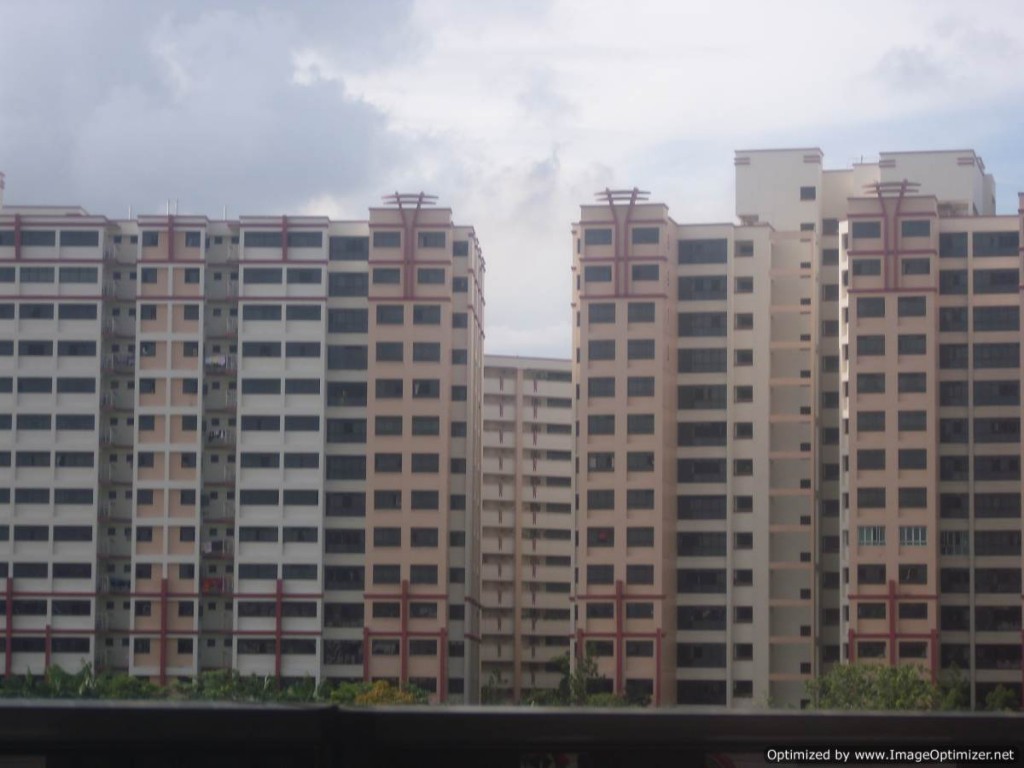
Read the full article here.
Join us on Facebook:
www.facebook.com/iCompareLoans
www.facebook.com/SGpropertyBuyer
www.facebook.com/sghomeloan
Showing posts with label Debt-to-service Ratio. Show all posts
Showing posts with label Debt-to-service Ratio. Show all posts
Tuesday, May 7, 2013
Thursday, April 11, 2013
A Quick Guide to Being a Guarantor for a Home Loan
Read the full article here.
Join us on Facebook:
www.facebook.com/iCompareLoans
www.facebook.com/SGpropertyBuyer
www.facebook.com/sghomeloan
Join us on Facebook:
www.facebook.com/iCompareLoans
www.facebook.com/SGpropertyBuyer
www.facebook.com/sghomeloan


Sunday, January 27, 2013
If Your Home Loan is Turned Down, ...
By SUSAN TEO

In this article, you will find some common problems that may cause financiers to reject your home mortgage application and suggestions to resolve these issues. But this is not an exhaustive guide of the factors for non-approval nor does it promise sure-work solutions that will improve your chances of getting a home loan. Thus you may prefer some professional advice from a mortgage consultant to assess your financial condition.
Most financiers will suss out the credit history of borrowers before granting a home mortgage. Do note that the repayment history, like default and late repayment, on most of your credit facilities are recorded by the Credit Bureau (Singapore), and released to credit providers on the Bureau.
Even records for closed accounts are kept. Any closed account, with defaults in payment, that comes with the status of full or negotiated settlement will be shown in your credit report for 3 years from the date of settlement.
Financiers consider your past repayment history as an indicator of future behaviour. If you have a poor credit score, financiers will be more cautious in lending. Even if they do lend, the loan quantum may be smaller.
2. High DSR (debt-to-service ratio)
DSR = Monthly Debt Service / Monthly Gross Household Income
Before loan approval, the financing institution will study your total outstanding financial liabilities and income level, to see if you have the means to service all your debts.
An excessively high DSR will almost certainly lead to rejection.
With the latest cooling measures on 12 January 2013, the mortgage serving ratio (MSR) is capped at 30% of a borrower's gross monthly income for loans by private banks, and 35% for HDB concessionary loans. Previously for HDB concessionary loans, the MSR was 40%, and for private loans there were no cap.
3. Employment history
If you are a fresh graduate who has only started work for a short time, you can be rejected because you have not demonstrated stable income-generating ability. Financiers take long-term stable employment, usually two years, as proof of payment ability.
4. Short reminding lease
A mortgage loan is secured against the property. The property is the collateral, whereby in the event of a default, the financiers will foreclose the mortgage. If the property you wish to purchase has a short reminding lease, it cannot be sold for much hence the financing institutions may not be able to recover all the loan disbursed.
5. Low valuation
Any factors that will seriously depreciate the valuation of your property can result in loan rejection. The house could be sitting on an undesirable location, in a dilapidated building, or in a location affected by future planning.
Pay off any defaults and make prompt payments from now on. This will help to pull up your credit score. To read more about credit score, you can browse “Tips to Make Your Mortgage Financing a Breeze”.
2. Longer loan tenure and lower loan quantum
Stretch your loan tenure and reduce the borrowing amount, this will reduce the monthly installment repayments, and lower the DSR.
3. Use a different lender
Some lenders may have more lenient borrowing requirements.
4. Get a guarantor
In the event of a default, the financing institution can hold the guarantor accountable for the loan repayment.
5. Combine incomes
Apply for the loan with someone who is working and drawing a salary. For instance, your spouse or a close relative. The financier will have greater confidence of loan repayment as there is now a higher income.
Whatever the factors affecting loan approval, remember that at the end of the day, the financiers just want to ascertain that you have the ability to make prompt repayments.
Read more articles at
PropertyBuyer.com.sg/articles
SingaporeHomeLoan.net/blog/
iCompareLoan.com/resources/category/faq/

In this article, you will find some common problems that may cause financiers to reject your home mortgage application and suggestions to resolve these issues. But this is not an exhaustive guide of the factors for non-approval nor does it promise sure-work solutions that will improve your chances of getting a home loan. Thus you may prefer some professional advice from a mortgage consultant to assess your financial condition.
Reasons for rejection
1. Poor credit standingMost financiers will suss out the credit history of borrowers before granting a home mortgage. Do note that the repayment history, like default and late repayment, on most of your credit facilities are recorded by the Credit Bureau (Singapore), and released to credit providers on the Bureau.
Even records for closed accounts are kept. Any closed account, with defaults in payment, that comes with the status of full or negotiated settlement will be shown in your credit report for 3 years from the date of settlement.
Financiers consider your past repayment history as an indicator of future behaviour. If you have a poor credit score, financiers will be more cautious in lending. Even if they do lend, the loan quantum may be smaller.
2. High DSR (debt-to-service ratio)
DSR = Monthly Debt Service / Monthly Gross Household Income
Before loan approval, the financing institution will study your total outstanding financial liabilities and income level, to see if you have the means to service all your debts.
An excessively high DSR will almost certainly lead to rejection.
With the latest cooling measures on 12 January 2013, the mortgage serving ratio (MSR) is capped at 30% of a borrower's gross monthly income for loans by private banks, and 35% for HDB concessionary loans. Previously for HDB concessionary loans, the MSR was 40%, and for private loans there were no cap.
3. Employment history
If you are a fresh graduate who has only started work for a short time, you can be rejected because you have not demonstrated stable income-generating ability. Financiers take long-term stable employment, usually two years, as proof of payment ability.
4. Short reminding lease
A mortgage loan is secured against the property. The property is the collateral, whereby in the event of a default, the financiers will foreclose the mortgage. If the property you wish to purchase has a short reminding lease, it cannot be sold for much hence the financing institutions may not be able to recover all the loan disbursed.
5. Low valuation
Any factors that will seriously depreciate the valuation of your property can result in loan rejection. The house could be sitting on an undesirable location, in a dilapidated building, or in a location affected by future planning.
How to obtain an approval?
1. Improve credit standingPay off any defaults and make prompt payments from now on. This will help to pull up your credit score. To read more about credit score, you can browse “Tips to Make Your Mortgage Financing a Breeze”.
2. Longer loan tenure and lower loan quantum
Stretch your loan tenure and reduce the borrowing amount, this will reduce the monthly installment repayments, and lower the DSR.
3. Use a different lender
Some lenders may have more lenient borrowing requirements.
4. Get a guarantor
In the event of a default, the financing institution can hold the guarantor accountable for the loan repayment.
5. Combine incomes
Apply for the loan with someone who is working and drawing a salary. For instance, your spouse or a close relative. The financier will have greater confidence of loan repayment as there is now a higher income.
Whatever the factors affecting loan approval, remember that at the end of the day, the financiers just want to ascertain that you have the ability to make prompt repayments.
Read more articles at
PropertyBuyer.com.sg/articles
SingaporeHomeLoan.net/blog/
iCompareLoan.com/resources/category/faq/
Friday, January 25, 2013
A Quick Guide to Being a Guarantor for a Home Loan
By SUSAN TEO
A guarantor or co-signer to a loan is a third party in a loan contract. In the event of a default by the borrower the co-signer is legally obliged to repay the loan. Thus, the decision to be a co-signer shall not be taken lightly.

More often than not, you might feel compelled to sign on the dotted line out of a sense of helpfulness or loyalty. However, when it comes to such a major financial undertaking, you will have to adopt an impersonal stance.
You must find out why the borrower needs a co-signer. If it is because he has a poor credit history, you should be wary about co-signing because if he is delinquent in his payment you will be liable for it.
2. Understand the responsibilities and terms of a co-signer as it is stated in the loan contract.
You should scrutinise the contract and understand the legal jargon.
As the person who asks you to co-sign is often a close friend or relative you trust, you may believe that he will make his repayment on time so you have no worries. Consequently, you gloss over difficult to understand terms in the contract, please do not run this risk. There are many home loan specialists, who will be happy to explain the terms of the contract to you for free. Try the professional and friendly mortgage consultants at www.iCompareLoan.com or Property Buyer.
Although you are not required to make any repayment on the loan unless the borrower defaults, financing institutions will still consider it as a financial liability when you apply for a loan yourself. Financing institutions may require you to declare if you are a guarantor.
Thus, the loan you are co-signing will add to your DSR and you may face difficulties in obtaining a loan. Or if you do obtain one, you may have to be contented with a lower loan quantum or higher interest rates (since banks with the best rates may not want to lend to you).
2. Added Financial Payments
If the borrower runs away, become insolvent or is not prompt in his monthly payment, the financier will turn to you to service his debt.
Do note that being a guarantor will not be reflected in the credit report of the Credit Bureau (Singapore). So even if the borrower defaults or makes late payments, it will not have any bearing on your credit score.
3. Removal of co-signer's status
Unfortunately, being a co-signatory is almost cast in stone. It is impossible to remove yourself from the contract without the permission of both the borrower and the bank. Further, there are legal fees involved for removal.
Read more articles at
PropertyBuyer.com.sg/articles
SingaporeHomeLoan.net/blog/
iCompareLoan.com/resources/category/faq/
A guarantor or co-signer to a loan is a third party in a loan contract. In the event of a default by the borrower the co-signer is legally obliged to repay the loan. Thus, the decision to be a co-signer shall not be taken lightly.

Things to take note of
1. Why does the borrower need a co-signer?More often than not, you might feel compelled to sign on the dotted line out of a sense of helpfulness or loyalty. However, when it comes to such a major financial undertaking, you will have to adopt an impersonal stance.
You must find out why the borrower needs a co-signer. If it is because he has a poor credit history, you should be wary about co-signing because if he is delinquent in his payment you will be liable for it.
2. Understand the responsibilities and terms of a co-signer as it is stated in the loan contract.
You should scrutinise the contract and understand the legal jargon.
As the person who asks you to co-sign is often a close friend or relative you trust, you may believe that he will make his repayment on time so you have no worries. Consequently, you gloss over difficult to understand terms in the contract, please do not run this risk. There are many home loan specialists, who will be happy to explain the terms of the contract to you for free. Try the professional and friendly mortgage consultants at www.iCompareLoan.com or Property Buyer.
Ramifications of co-signing
1. Affect your debt-to-service ratio (DSR)Although you are not required to make any repayment on the loan unless the borrower defaults, financing institutions will still consider it as a financial liability when you apply for a loan yourself. Financing institutions may require you to declare if you are a guarantor.
Thus, the loan you are co-signing will add to your DSR and you may face difficulties in obtaining a loan. Or if you do obtain one, you may have to be contented with a lower loan quantum or higher interest rates (since banks with the best rates may not want to lend to you).
2. Added Financial Payments
If the borrower runs away, become insolvent or is not prompt in his monthly payment, the financier will turn to you to service his debt.
Do note that being a guarantor will not be reflected in the credit report of the Credit Bureau (Singapore). So even if the borrower defaults or makes late payments, it will not have any bearing on your credit score.
3. Removal of co-signer's status
Unfortunately, being a co-signatory is almost cast in stone. It is impossible to remove yourself from the contract without the permission of both the borrower and the bank. Further, there are legal fees involved for removal.
Read more articles at
PropertyBuyer.com.sg/articles
SingaporeHomeLoan.net/blog/
iCompareLoan.com/resources/category/faq/
Friday, January 18, 2013
Tips to Make Your Mortgage Financing a Breeze
By SUSAN TEO and PAUL HO

Finding the right mortgage can be a stressful experience for novice mortgage hunters, this article attempts to offer simple advice to simplify the process and safeguard your wallet (figuratively, of course!).
Arming yourself with too many credit cards is one way to adversely affect your financial health because it provides a false sense of financial strength when all you are doing is spending on borrowed money. Without financial discipline, you will soon find yourself mired in debt. Be prudent, do not sign up for more cards than you need!
Furthermore even if you don't owe a single cent on your cards, having credit cards reduce your overall loan borrowing quantum.
To check your credit score, you may do so at the Credit Bureau (Singapore).
A note of caution will be in place here. DSR has been criticised for being only a short-term measure of housing affordability (There are other indicators of long and short-run affordability, but these are beyond the scope of this article). In the long run, household income may rise or fall, and so will the debt service. Therefore, you may want to compute DSR for different scenarios. For example, when a household member loses his job or when there is an increase in financial liability (debt service) – for instance from an unexpected spike in interest rates.
Besides the DSR for mortgage liability, you also have to take into account your overall financial liabilities. Some things to consider: do you have children going to universities or any medical conditions? If yes, when the debt service surges will you be able to service all the debts, still?
At any rate, contingencies can always happen, be sure that you can still finance your mortgage when that happens; lest you may be forced to sell that house - even at a loss.
There are also interest-offset loans. To read more about these different loan types, go here. Select the one that best suits your financial and risk profile.
Try to select a loan that will offer affordable interest rates throughout the entire life of the loan, not just in the beginning, if possible. Do not assume you can always refinance or reprice to a cheaper loan package after a few years.
MAS (Monetary Authority of Singapore – Singapore's Central Bank) may introduce new regulations from time to time, which could make borrowing easier or harder. For example, from 6 October 2012, MAS (Monetary Authority of Singapore) mandates that all new and refinanced loans have a 35-year cap on the loan tenure.
In addition, interest rate trend do not remain stationary. When the time for refinancing comes, you may find yourself in a high interest rate environment. An example follows
Loan Package X has an interest rate of 1.5% for the first three years, and 1.7% thereafter.
Loan Package Y has an interest rate of 1.3% for the first three years, and 2.0% thereafter.
If you started off with Package Y, thinking that after three years you could refinance to a more affordable loan, you may discover - horror of horrors - that the cheapest loan starts at 1.9% now. You would be better off if you had selected Package X right from the start. But, of course, you can wait for rates to drop again before refinancing (incurring higher interest rates for several months or longer). Thus, when faced with alternatives, similar to the example, you will have to carefully consider whether the initial lower rates justify the risks of possibly higher rates a few years down the road.
If you feel lost in the sea of loan types, you can always make use of the free professional mortgage advice and home loan reports at www.iCompareLoan.com, which boosts Singapore's most advanced cloud-based home loan analysis system.
Finally, choose a reputable financing institution. You do not want a case of the financier exercising his right of “margin call” when valuations fall!
A case in point: A week after Person A had obtained an approved-in-principle home loan, he went to purchase a car and financed it with a car loan. Two weeks later, the financier who was to grant formal approval for the mortgage discovered Person A had taken a car loan too. Consequently, he substantially reduced the loan quantum. Because of the reduction, Person A could no longer afford the house so the deal fell through and he had to forfeit his 1% deposit.
Therefore it is important to check with a home loans expert before taking on a new loan obligation.
Read more articles at
PropertyBuyer.com.sg/articles
SingaporeHomeLoan.net/blog/
iCompareLoan.com/resources/category/faq/

Finding the right mortgage can be a stressful experience for novice mortgage hunters, this article attempts to offer simple advice to simplify the process and safeguard your wallet (figuratively, of course!).
Maintain a good credit standing
Always try to maintain a good credit history as some credit-related information is collected by the Credit Bureau (Singapore) and released to credit providers on the Bureau when you apply for a loan. Avoid making late payments or defaulting on any loans with a financing institution, as these will give you a poor credit score, which will lock you out of loans with the best interest rates (as many banks may decline to offer you a loan). The credit report of the Bureau shows the account status history on all the credit facility you have on a rolling 12-month basis. For closed accounts, the status history of the last 12 months before account closure is made available. If you have been making prompt payments for all your credit facilities in the last 12 months, you will be assigned the best score of 12 “AAAAAAAAAAAA”.Arming yourself with too many credit cards is one way to adversely affect your financial health because it provides a false sense of financial strength when all you are doing is spending on borrowed money. Without financial discipline, you will soon find yourself mired in debt. Be prudent, do not sign up for more cards than you need!
Furthermore even if you don't owe a single cent on your cards, having credit cards reduce your overall loan borrowing quantum.
To check your credit score, you may do so at the Credit Bureau (Singapore).
Correctly assess your financial capabilities
Do not bite off more than you can chew. Buying a large house simply to keep up with the Joneses is not good financial sense. Rather, opt for a purchase that you can comfortably finance even when your financial situation changes for the worse. Use the debt-to-service ratio (DSR) of 30% as a rough gauge of affordability:
DSR = Monthly Debt Service for Mortgage / Monthly Gross Household Income
A note of caution will be in place here. DSR has been criticised for being only a short-term measure of housing affordability (There are other indicators of long and short-run affordability, but these are beyond the scope of this article). In the long run, household income may rise or fall, and so will the debt service. Therefore, you may want to compute DSR for different scenarios. For example, when a household member loses his job or when there is an increase in financial liability (debt service) – for instance from an unexpected spike in interest rates.
Besides the DSR for mortgage liability, you also have to take into account your overall financial liabilities. Some things to consider: do you have children going to universities or any medical conditions? If yes, when the debt service surges will you be able to service all the debts, still?
At any rate, contingencies can always happen, be sure that you can still finance your mortgage when that happens; lest you may be forced to sell that house - even at a loss.
Shop around for the right mortgage type and financier
Do your homework and study the different loan types available on the market. Financing institutions may introduce new loan features and types every now and then. Some packages available include the fixed rate, floating rate or a combination of both, also known as a hybrid loan.There are also interest-offset loans. To read more about these different loan types, go here. Select the one that best suits your financial and risk profile.
Try to select a loan that will offer affordable interest rates throughout the entire life of the loan, not just in the beginning, if possible. Do not assume you can always refinance or reprice to a cheaper loan package after a few years.
MAS (Monetary Authority of Singapore – Singapore's Central Bank) may introduce new regulations from time to time, which could make borrowing easier or harder. For example, from 6 October 2012, MAS (Monetary Authority of Singapore) mandates that all new and refinanced loans have a 35-year cap on the loan tenure.
In addition, interest rate trend do not remain stationary. When the time for refinancing comes, you may find yourself in a high interest rate environment. An example follows
Loan Package X has an interest rate of 1.5% for the first three years, and 1.7% thereafter.
Loan Package Y has an interest rate of 1.3% for the first three years, and 2.0% thereafter.
If you started off with Package Y, thinking that after three years you could refinance to a more affordable loan, you may discover - horror of horrors - that the cheapest loan starts at 1.9% now. You would be better off if you had selected Package X right from the start. But, of course, you can wait for rates to drop again before refinancing (incurring higher interest rates for several months or longer). Thus, when faced with alternatives, similar to the example, you will have to carefully consider whether the initial lower rates justify the risks of possibly higher rates a few years down the road.
If you feel lost in the sea of loan types, you can always make use of the free professional mortgage advice and home loan reports at www.iCompareLoan.com, which boosts Singapore's most advanced cloud-based home loan analysis system.
Finally, choose a reputable financing institution. You do not want a case of the financier exercising his right of “margin call” when valuations fall!
Understand the legal and financial jargon
After you have found your ideal loan and made a successful application, you will receive a Letter of Offer from the bank. Scrutinise this document and understand what all the conditions in the loan entail. If in doubt, consult a lawyer. Or alternatively asks the bank to clarify in plain English whatever terms you have problems understanding.Changing jobs
It is best to make a loan application and complete the loan disbursement before a job change. Because for some financiers you have to be in the same job for a minimum duration before you will be eligible for a loan.Adding on new debt
Steer clear of applying for a new loan during the interim period after obtaining an in-principle approval but before loan disbursement.A case in point: A week after Person A had obtained an approved-in-principle home loan, he went to purchase a car and financed it with a car loan. Two weeks later, the financier who was to grant formal approval for the mortgage discovered Person A had taken a car loan too. Consequently, he substantially reduced the loan quantum. Because of the reduction, Person A could no longer afford the house so the deal fell through and he had to forfeit his 1% deposit.
Therefore it is important to check with a home loans expert before taking on a new loan obligation.
Read more articles at
PropertyBuyer.com.sg/articles
SingaporeHomeLoan.net/blog/
iCompareLoan.com/resources/category/faq/
Thursday, January 10, 2013
Factors to Consider in Buying a Residential Property in Singapore
By SUSAN TEO and PAUL HO
Due to the success of Singapore's public housing policy, which begins in the 1960s, 80% of the Singapore's populace live in HDB flats today. Private housing are mainly for higher income earners. Those considering buying a residential property in this island nation have to take into account a variety of factors, we will take a closer look at each in turn in this article.

* A land at Jalan Jurong Kechil is the first 60-year lease plot to be sold (on 15 November 2012); thus a 60-year private property will be available in a few years' time.
** Executive Condominium becomes private after 10 years.
* A land at Jalan Jurong Kechil is the first 60-year lease plot to be sold (on 15 November 2012); thus a 60-year private property will be available in a few years' time.
To decide which housing type suit the buyer's budget, a commonly used measure of housing affordability is the debt-to-service ratio (DSR), defined as
DSR = Monthly Debt Service / Monthly Gross Household Income
The internationally recognised benchmark for housing affordability is a DSR of 30 per cent. For example, based on a household with a monthly income of S$3,000 buying a S$300,000 3-room HDB flat, with no housing grants, the household can take a loan of up 80 per cent of the price (assuming that they have no outstanding mortgage loan), or S$240,000. Given an annual interest rate of 2 per cent, based on a 30-year loan, the monthly installment incurred will be about S$887. This works out to a DSR of roughly 30%, which still falls within the affordable range.
Another widely used affordability measure divides the price of a home by a potential buyer’s annual income.
Nevertheless, these two measures are only short-term measures as buyers' income may change over time.
To overcome this issue, a long-term measure of housing affordability was developed by Prof Abeysinghe of the National University of Singapore, to find out more about this measure go here. When deciding between a HDB and private property, besides the affordability, buyers may also want to look at the investment potential of the houses.
Nevertheless after MOP, owners of larger HDB flats can make a profit by downgrading to a smaller unit. Those who are tempted to sell for a profit during a booming property market may not be better off as they will have to pay a high price for another flat. Moreover, if their current flat was bought with a housing grant, they will have to incur a resale levy when they buy a second subsidised HDB flat.
However, some Singaporeans are still profiteering from renting out their HDB flats. Under current regulations, owners of subsidised or non-subsidised HDB flats have to meet the requirement of a 5-year MOP before they are allowed to rent out their flats. Exceptions are made for owners who live overseas.
Furthermore, there are restrictions on the rental periods. For Singaporean owners they could rent out their flats for a period of 3 years after which they could request for extensions with no cap on the number of requests. For PRs, however, it is a different story. They are only allowed to rent out for a period of a year, subject to discretionary extensions, with a limit of 5 years on the total rental years allowed.
However, for adventurous homeowners who are looking at flipping private properties to increase their wealth, they are restricted by the string of anti-speculative measures instituted by the Government since 2009.
Properties acquired after 20 February 2010, are subjected to a Sellers' Stamp Duty of 4% to 16% of the selling price or market value, whichever is higher , if they are disposed of within 1 to 4 years after purchase.
In addition, for property purchases after 8 December 2011, an additional Buyer's Stamp Duty of 3% is imposed on Singapore citizens buying their third and subsequent properties. For PRs, the 3% will be imposed on their second and subsequent purchases, instead.
Read more articles at
PropertyBuyer.com.sg/articles
SingaporeHomeLoan.net/blog/
iCompareLoan.com/resources/category/faq/
Due to the success of Singapore's public housing policy, which begins in the 1960s, 80% of the Singapore's populace live in HDB flats today. Private housing are mainly for higher income earners. Those considering buying a residential property in this island nation have to take into account a variety of factors, we will take a closer look at each in turn in this article.

Reason for purchase
First and foremost, buying a property for investment or owner-occupation makes a difference. Naturally, if it for investment, the chief factor in consideration will be the capital gain. On the other hand, buying for owner-occupation makes capital gain a secondary concern. In this case, more important factors will be the current or future size of the household. A retiree or single may opt for a smaller flat. While a young, married couple may also choose a small flat if their financial means are limited, or a large flat if they are planning to have children and provided if they are rich enough to afford it.Type of housing
The next consideration is the housing type. With the many types available, buyers are often spoil for choice. The below two tables compare the private and public housing segments.
Table 1: Available Housing Types in Singapore
| HDB (99-year lease) | Private Housing (60-*, 99-, 999- year lease; freehold) |
Build-to-Order (BTO)
|
Walk-up ApartmentHigh-rise ApartmentCondominiumShoebox ApartmentSohoStrata Titled Cluster Housing
|
Table 2: Comparison of HDB and Private Housing
HDB
|
Private Housing
|
Eligibility:Direct Purchase from HDB -
(For Executive Condominium ≤
$12,000)Resale -
Most Affordable Type of Housing For Owner-occupation Lower Maintenance Cost (Conservancy Charges) Stringent Restriction for Leasing Out Minimum Occupation Period |
Eligibility:Non-landed -
60-*, 99-, 999- year Lease; Freehold Tend to be More Expensive For Owner-occupation and Investment Higher Maintenance Cost (Property Taxes, Monthly Maintenance Charges, etc.) No Restriction for Leasing Out No Minimum Occupation Period |
To decide which housing type suit the buyer's budget, a commonly used measure of housing affordability is the debt-to-service ratio (DSR), defined as
DSR = Monthly Debt Service / Monthly Gross Household Income
The internationally recognised benchmark for housing affordability is a DSR of 30 per cent. For example, based on a household with a monthly income of S$3,000 buying a S$300,000 3-room HDB flat, with no housing grants, the household can take a loan of up 80 per cent of the price (assuming that they have no outstanding mortgage loan), or S$240,000. Given an annual interest rate of 2 per cent, based on a 30-year loan, the monthly installment incurred will be about S$887. This works out to a DSR of roughly 30%, which still falls within the affordable range.
Another widely used affordability measure divides the price of a home by a potential buyer’s annual income.
Nevertheless, these two measures are only short-term measures as buyers' income may change over time.
To overcome this issue, a long-term measure of housing affordability was developed by Prof Abeysinghe of the National University of Singapore, to find out more about this measure go here. When deciding between a HDB and private property, besides the affordability, buyers may also want to look at the investment potential of the houses.
HDB flats' investment potential
From the Government's standpoint, HDB flats are meant for living purposes and not for speculation. Hence HDB flats are subjected to a Minimum Occupation Period (MOP) of 5 years whether for a resale or direct purchase from HDB. This curbs house flipping of HDB flats.Nevertheless after MOP, owners of larger HDB flats can make a profit by downgrading to a smaller unit. Those who are tempted to sell for a profit during a booming property market may not be better off as they will have to pay a high price for another flat. Moreover, if their current flat was bought with a housing grant, they will have to incur a resale levy when they buy a second subsidised HDB flat.
However, some Singaporeans are still profiteering from renting out their HDB flats. Under current regulations, owners of subsidised or non-subsidised HDB flats have to meet the requirement of a 5-year MOP before they are allowed to rent out their flats. Exceptions are made for owners who live overseas.
Furthermore, there are restrictions on the rental periods. For Singaporean owners they could rent out their flats for a period of 3 years after which they could request for extensions with no cap on the number of requests. For PRs, however, it is a different story. They are only allowed to rent out for a period of a year, subject to discretionary extensions, with a limit of 5 years on the total rental years allowed.
Private housing's investment potential
In contrast, the rental rules for private properties are less stringent. Of note is that Singaporeans are not allowed to own HDB flats and private homes concurrently within the MOP. After the MOP, Singaporeans often make a profit by living in HDB flats while renting out their private properties.However, for adventurous homeowners who are looking at flipping private properties to increase their wealth, they are restricted by the string of anti-speculative measures instituted by the Government since 2009.
Properties acquired after 20 February 2010, are subjected to a Sellers' Stamp Duty of 4% to 16% of the selling price or market value, whichever is higher , if they are disposed of within 1 to 4 years after purchase.
In addition, for property purchases after 8 December 2011, an additional Buyer's Stamp Duty of 3% is imposed on Singapore citizens buying their third and subsequent properties. For PRs, the 3% will be imposed on their second and subsequent purchases, instead.
Read more articles at
PropertyBuyer.com.sg/articles
SingaporeHomeLoan.net/blog/
iCompareLoan.com/resources/category/faq/
Subscribe to:
Posts (Atom)

 Posts
Posts